
As more families look to support loved ones in later life at home, the conversation is evolving. It’s no longer just about care in the traditional sense - it’s about how to maintain independence, confidence and security through periods of change in later life.
Transitions such as relocating, downsizing, or introducing care can be positive and necessary steps, but they can also bring disruption. New routines, new environments and new people all play a role - and with that can come forms of vulnerability that aren't always immediately visible.
At the same time, many older people are using digital services more than ever before - from banking to communication - which introduces additional exposure to scams, impersonation and data misuse. In this context, thinking about risk in purely physical terms is no longer enough. Increasingly, it spans digital, emotional, and reputational dimensions too - particularly during moments of transition.
This broader understanding of risk is reflected in UMBRA’s framework, which is built around four key pillars - Physical, Digital, Reputational and Emotional Security - shaping how it supports safer, more resilient environments in later life.
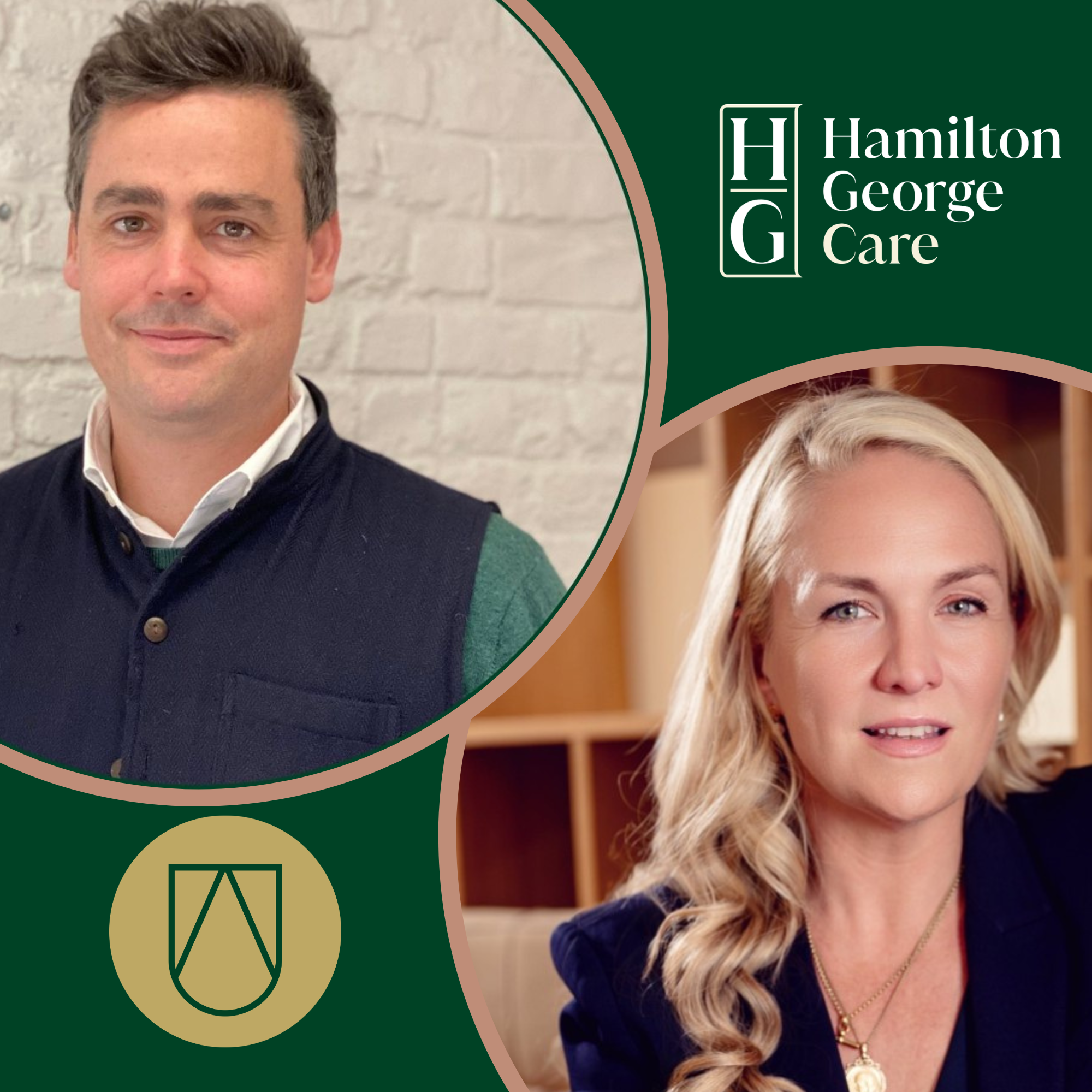
In this conversation, Fred Lloyd-George, Founder of Hamilton George Care, and Kate Bright Founder of UMBRA, share perspectives on how families can better support older people through these changes - protecting independence while building resilience in a more joined-up way.
As a leading private client private office, UMBRA International Group offers a range of bespoke protective and proactive security solutions.
For more information please visit: https://umbrainternational.com/
Kate: Fred, supporting people to live well at home is clearly central to what you do. From what you’re seeing with families day-to-day, how well-prepared are they really for the realities of ageing?
Fred: In our experience, many families leave it later than they ideally should. It often takes a fall or a medical event for the conversation to become urgent - and at that point, decisions need to be made quickly.
We always encourage families to plan ahead and open up these discussions earlier, when they can be approached more naturally. Ageing brings complexity - emotionally, practically, and logistically - particularly where multiple family members and advisors are involved.
Hamilton George Care is a fully managed, live-in care agency, and when families come to us, what they value most is that everything is handled in a cohesive, discreet way. It allows them to step back from the operational burden, knowing their loved one is supported holistically - not just clinically, but personally and securely within their own home.
We always encourage families to speak to us as early as possible in the decision-making process. Even if live-in care isn’t ultimately the right route, having a clear understanding of the options available - and how they may evolve - puts families in a far stronger position when the time comes to make decisions.
Kate: Deciding to move ahead with care support is a big step. What makes that moment more significant than people often expect?
Fred: Introducing care into the home is rarely just a practical decision - it’s an emotional shift.
For many individuals, it represents a change in identity: moving from complete independence to accepting support. That can bring a sense of vulnerability, even when the care itself is positive.
At the same time, the home - which has always been a private, controlled environment - now involves new people, new routines, and new dynamics.
When handled well, it can be a very empowering step that enables someone to continue living well at home. But it requires sensitivity, the right personalities, and a carefully managed introduction. That’s where a fully managed approach can make a meaningful difference - ensuring continuity, trust, and discretion from the outset.
Kate: When someone moves or introduces care, there’s often a lot of change happening at once - new addresses, new routines, new people involved. Do you see that creating any kind of increased exposure or risk - whether that’s financial, personal or even reputational - that families might not anticipate?
Fred: Yes - and often in ways families don’t initially anticipate.
There are multiple routes to finding care, from private arrangements to introduction agencies and fully managed services. The level of oversight varies significantly between them.
At a minimum, families should ensure thorough vetting - including DBS checks, where organisations like yours at UMBRA provide support, right to work, references, and training. At Hamilton George Care, we go further, including detailed background and online presence checks to build a more complete picture.
There are also important considerations around data privacy and access. Carers may need to liaise with medical professionals or access sensitive information, so contracts and permissions need to be clearly understood.
And beyond process, there’s the human element. You are inviting someone into a private household - often alongside existing staff - so trust, discretion, and personal compatibility are absolutely critical.
Kate: What we tend to see alongside that is that risk doesn’t remain static once those decisions have been made — it evolves as circumstances change.
During transitions, new people, systems and routines are often introduced at pace. Without a clear structure around that, families can lose visibility of who has access to what — whether that’s information, finances, or day-to-day decision-making.
The families who navigate this most confidently are those who think about oversight early — not in a restrictive way, but in terms of how information flows, how responsibilities are defined, and how everything connects.
When that structure is in place, it becomes much easier to support independence while maintaining a clear sense of control and reassurance.
Kate: When families start planning for care or a move, what do they tend to focus on - and what do they often overlook?
Fred: Speed is often the primary focus - understandably so, particularly following a change in health or circumstances.
However, what can be overlooked is how interconnected everything becomes once care is introduced.
Families don’t always consider how care integrates with the wider household - existing staff, schedules, residences, and family routines. In more complex households, ensuring everyone is aligned and working collaboratively is key to maintaining both quality of care and overall security.
Future-proofing is another area that’s often missed. Needs evolve - sometimes gradually, sometimes quickly - and putting the right structure in place early can avoid repeated disruption.
There’s also a tendency to focus on the practical delivery of care, rather than the broader picture:
- how independence will be maintained
- how communication will flow between family, carers, and other professionals
- and how emotional wellbeing and social connection will be supported
The most effective arrangements are those that are joined-up - where care, lifestyle, household staff, and family oversight all work together seamlessly.
Kate: We’re seeing more scams targeting older people. From your perspective, why are they so often the focus?
Fred: Older individuals are often more exposed for a combination of reasons.
Many didn’t grow up in a digital-first world, so the cues around what is and isn’t trustworthy aren’t always as instinctive. At the same time, they may not have immediate support on hand to sense-check something unusual.
Loneliness can also play a role. An unexpected call or message can feel welcome - which is exactly what scammers exploit.
The answer isn’t simply restriction. It’s about building awareness, maintaining regular human connection, and ensuring there are trusted people around them.
In many cases, strengthening those day-to-day support networks - whether through family, carers, or companions - is one of the most effective ways to reduce risk.
Kate: Alongside that, what we often see is that awareness alone isn’t always enough — particularly as communication becomes more digital and more constant.
A small amount of structure can make a significant difference. That might mean having agreed ways to sense-check unusual activity, clearer visibility of communication patterns, or simple safeguards that sit in the background without feeling intrusive.
The aim isn’t to take control away, but to ensure there is a layer of reassurance around the individual — so that independence is preserved, while risk is quietly managed.
Kate: Families often step in and take control of devices or accounts. Does that approach protect people, or can it risk taking away independence?
Fred: It can do both, which is why it needs to be handled carefully.
Technology plays a vital role in maintaining independence - whether that’s staying in touch with family through video calls, managing day-to-day tasks, or even accessing remote medical support.
Rather than removing access, in most situations, the focus should be on creating the right structure around it.
We often work closely with the family, the individual, and the care team to understand exactly what technology is being used, what is needed, and where sensible safeguards should sit. That might include simplifying devices, adding layers of protection, or setting agreed boundaries - without removing the person’s sense of control.
When approached collaboratively, technology can become an enabler of both safety and independence.
Kate: If a family wanted to better protect someone in the next month, what are a few practical things they could do differently?
Fred: A good starting point is becoming more closely connected to day-to-day life.
That might mean having greater visibility of calendars, routines, and any changes in behaviour or needs - small shifts can often be early indicators that something requires attention.
Speaking with experts is also key. Whether that’s medical professionals, care specialists, or advisors, understanding the range of options available allows families to make more informed decisions before situations become urgent.
Alongside that:
- review current care or support structures
- sense-check digital security and communication habits
- and ensure everyone involved - family, carers, and household staff - is aligned
Proactive, joined-up thinking is what ultimately creates resilience.
Kate: You and I have spoken before about how values shape organisations. How do your values influence the way you approach care day-to-day?
Fred: Our values are deeply rooted in discipline, integrity, and service - shaped not only by our professional backgrounds, but also by our time in the British Army.
That experience instilled a strong sense of responsibility, attention to detail, and the importance of trust - all of which translate directly into how we deliver care.
For us, it’s about more than meeting needs. It’s about providing a structured, discreet, and highly personalised service that families can rely on completely.
Kate: Those conversations also led to Hamilton George signing the Armed Forces Covenant - something we spoke about early on when we first started working together. What made that commitment resonate with you, and what has it meant in practice?
Fred: It was a very natural step for us.
Both Alex and I, as founders, and our Managing Director - who works closely with every family we support - all served as officers in the British Army. The values of service, accountability, and looking after people are embedded in how we operate.
Signing the Armed Forces Covenant was a way of formalising that commitment. It reflects not only our support for the Armed Forces community, but also the standards we hold ourselves to as an organisation.
In practice, it influences how we recruit, how we train, and how we deliver care - with a strong emphasis on trust, discretion, and operational excellence.
Kate: If you could challenge families to rethink one assumption about ageing and risk, what would it be?
Fred: That risk is purely physical.
Today, it’s far broader - spanning digital, emotional, and reputational dimensions, particularly in complex households or during periods of change.
The families who navigate this best are those who take a more holistic view - bringing together care, security, technology, and human connection.
When those elements are aligned, it becomes possible not just to reduce risk, but to actively strengthen independence and quality of life.
Kate: I would agree — and what we see in practice is that risk tends to emerge not from any single decision, but from how everything connects over time.
As care, technology, and support networks evolve, families can lose a clear line of sight across what’s happening day-to-day. It’s often that lack of visibility — rather than any one factor — that creates vulnerability.
When there is a more joined-up view, with clear visibility and shared understanding between everyone involved, it becomes much easier to support independence while managing risk in a way that feels natural rather than restrictive.
